
Why Signage Is an Important Part of Your Business Branding
Why Signage Is an Important Part of Your Business Branding
When people think about branding, they often think about logos, colours, websites and social media.
But for businesses with a physical location, your storefront is one of the most visible parts of your brand.
Before a customer walks into your store, restaurant, salon, showroom or office, they may see your signage first.
A well-designed sign can communicate your brand identity, create a professional impression and help customers recognise your business.
Here's why signage deserves an important place in your overall branding strategy.
1. Your Signage Creates the First Impression

Your storefront may be the first interaction a potential customer has with your business.
A professional sign can immediately communicate that your business is established, organised and attentive to detail.
On the other hand, outdated, damaged or difficult-to-read signage can make a business appear less professional.
Your signage should therefore be treated as part of your brand—not simply as a board displaying your name.
2. Signage Makes Your Brand Visible
A strong brand needs to be recognisable.
Your storefront signage gives customers a physical point of recognition.
When your logo, colours, typography and visual style are consistently used across your signage and other brand touchpoints, customers can begin to associate those visual elements with your business.
This is especially important for businesses located in busy commercial areas where many brands compete for attention.
3. Your Sign Should Reflect Your Brand Personality
Different businesses have different personalities.
A luxury jewellery store may want a sophisticated and premium appearance.
A modern café might prefer something creative and welcoming.
A corporate office may require a clean and professional visual identity.
Your signage materials, colours, typography, finishes and lighting should reflect the personality you want your customers to associate with your brand.
4. Brand Colours Should Carry Through to Your Signage
Your brand colours shouldn't exist only on your website or business cards.
They can also be incorporated into your physical environment.
For example, your brand colours can appear in:
- Storefront signage
- 3D letters
- Illuminated logos
- Glass graphics
- Reception signage
- Interior branding
- Feature walls
Consistent use of colour can help create a more unified brand experience.
5. Your Logo Should Be Clearly Visible
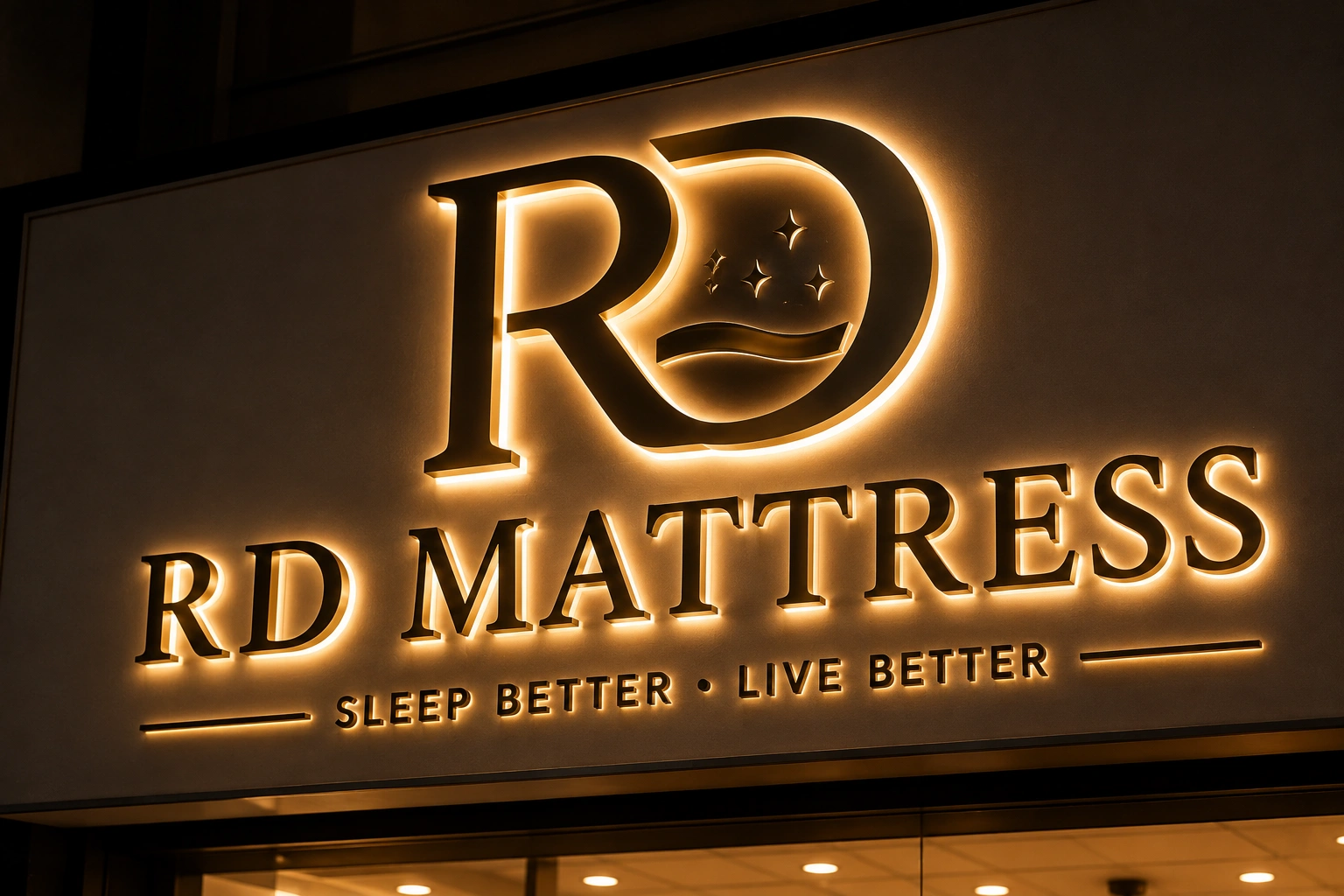
Your logo is one of the most recognisable elements of your brand.
Using it effectively on your storefront can help customers identify your business quickly.
Depending on the design, logos can be fabricated using materials such as acrylic, metal or other suitable finishes and can be illuminated to improve visibility.
The goal isn't to make the logo unnecessarily large.
It is to make it clear, recognisable and appropriately positioned.