Commercial & Architectural Lighting: A Complete Guide for Businesses
Commercial & Architectural Lighting: A Complete Guide for Businesses
Lighting plays an important role in how a commercial space looks, feels and functions.
From the exterior of a commercial building to the interiors of offices, showrooms, restaurants and retail stores, well-planned lighting can improve visibility, highlight architectural features and create a more welcoming environment.
Commercial and architectural lighting goes beyond simply making a space brighter. It involves selecting and positioning lighting to complement the architecture, purpose and identity of a space.
In this guide, we'll look at the key aspects of commercial and architectural lighting and what businesses should consider when planning a lighting project.
What Is Commercial & Architectural Lighting?
Commercial lighting refers to lighting designed for business and commercial environments such as offices, retail stores, restaurants, hotels, showrooms and commercial buildings.
Architectural lighting focuses on integrating light with the design of a building or space.
It can be used to:
- Highlight architectural features
- Improve visibility
- Create ambience
- Enhance a building's appearance
- Guide people through a space
- Highlight products and displays
- Support a brand's visual identity
When properly planned, lighting becomes part of the overall design rather than simply an additional feature.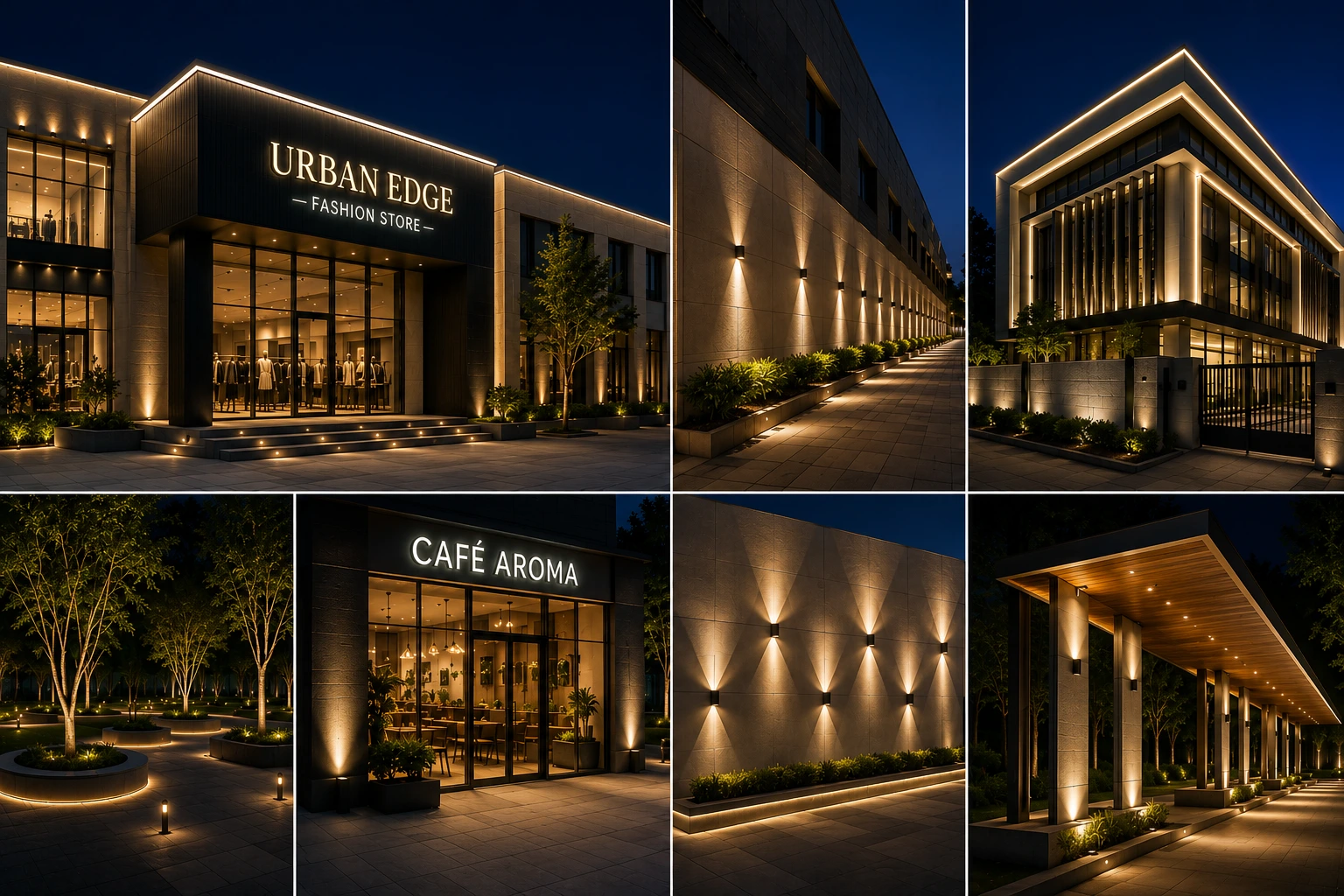
1. Façade Lighting
The exterior of a building is often the first thing people see.
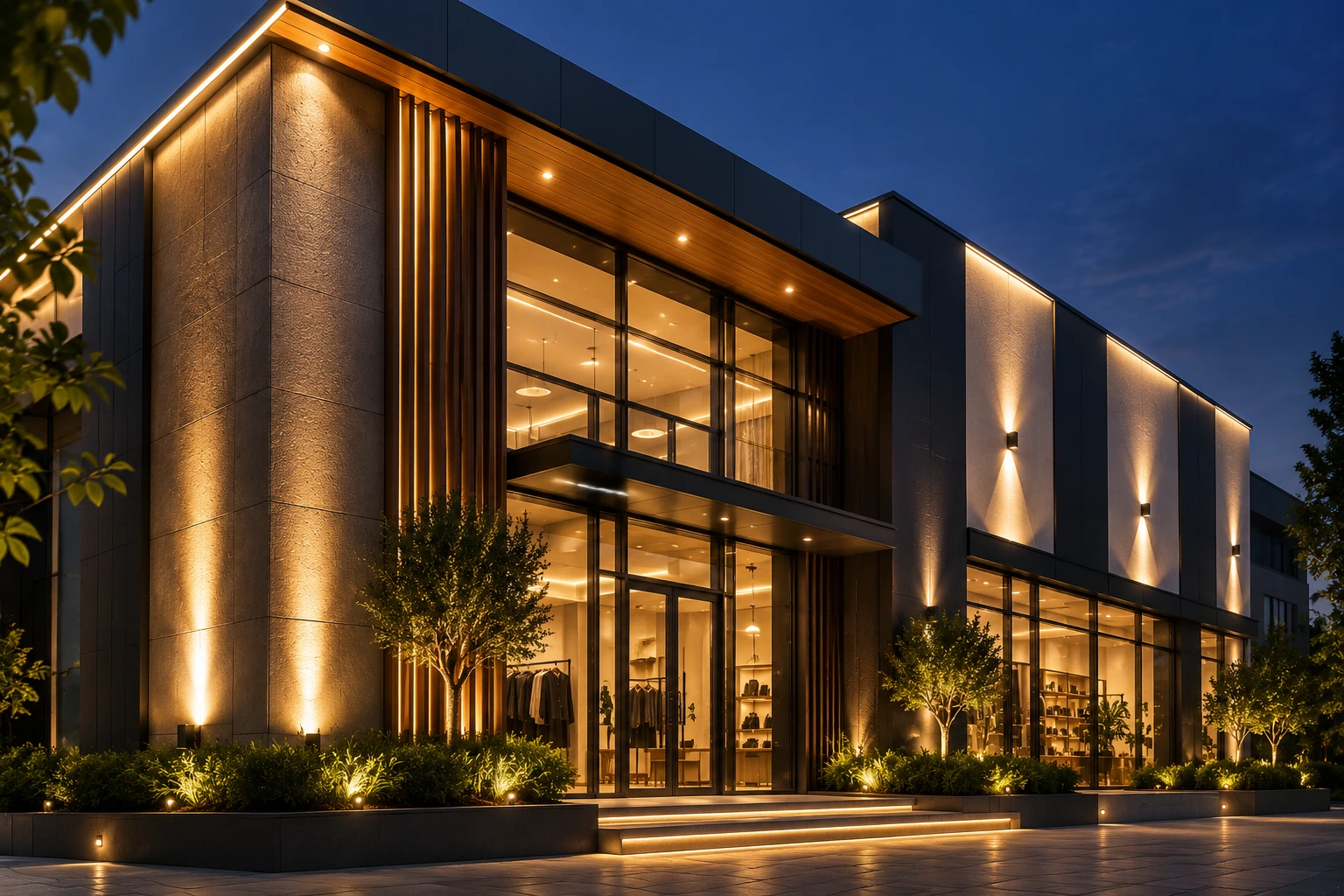
Façade lighting can highlight architectural elements such as walls, columns, textures, entrances and structural details.
Lighting can be positioned to create different effects, from subtle illumination to dramatic architectural highlights.
Suitable for:
- Commercial buildings
- Hotels
- Showrooms
- Retail properties
- Restaurants
- Corporate offices
2. Retail & Showroom Lighting
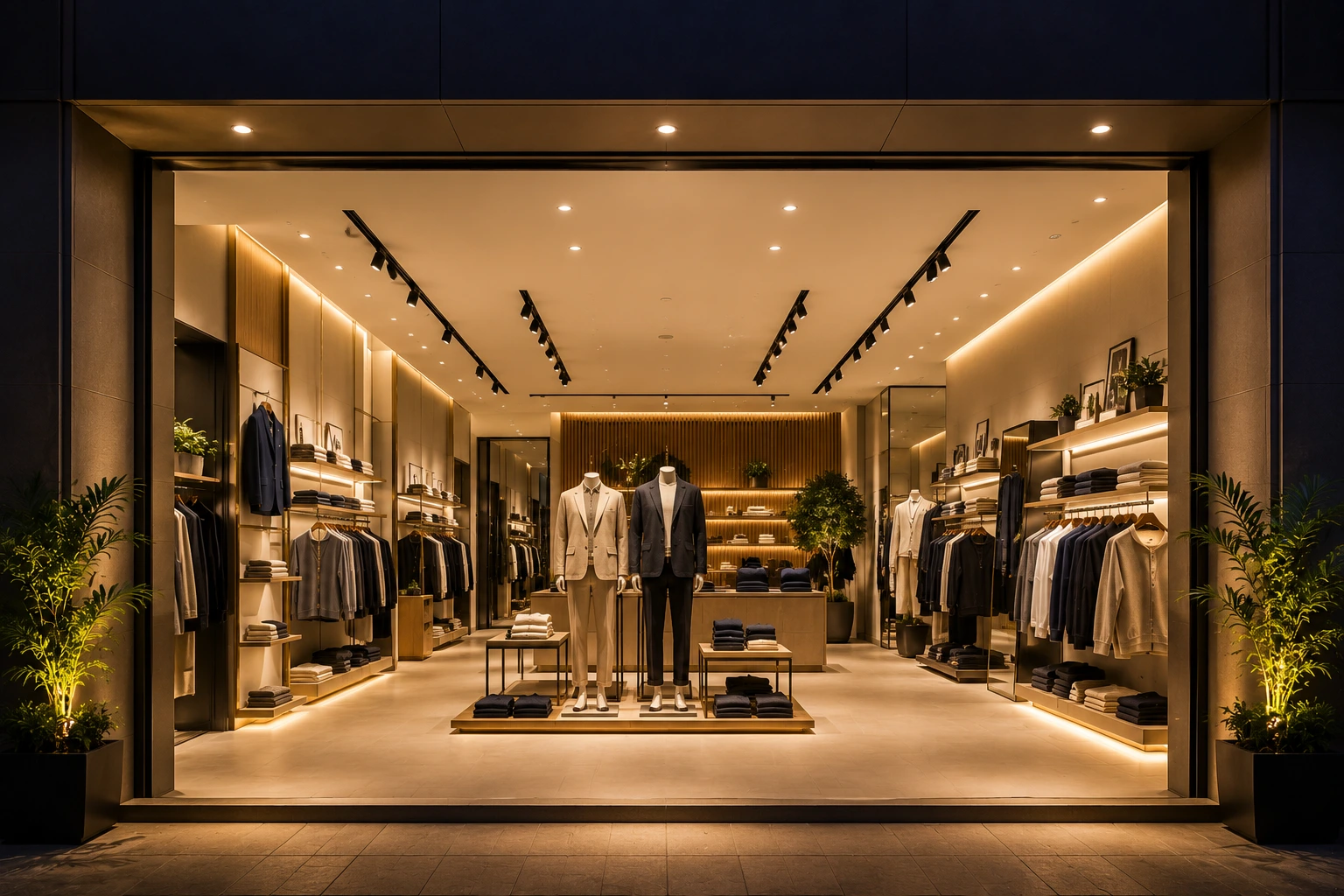
Lighting is particularly important in retail environments because it influences how customers experience products and displays.
Well-planned lighting can draw attention to important areas while creating a comfortable shopping environment.
Different lighting layers can be used for:
- Product displays
- Shelving
- Signage
- Entrance areas
- Feature walls
- Promotional displays
The right lighting can help products appear more attractive while maintaining a consistent visual experience throughout the space.
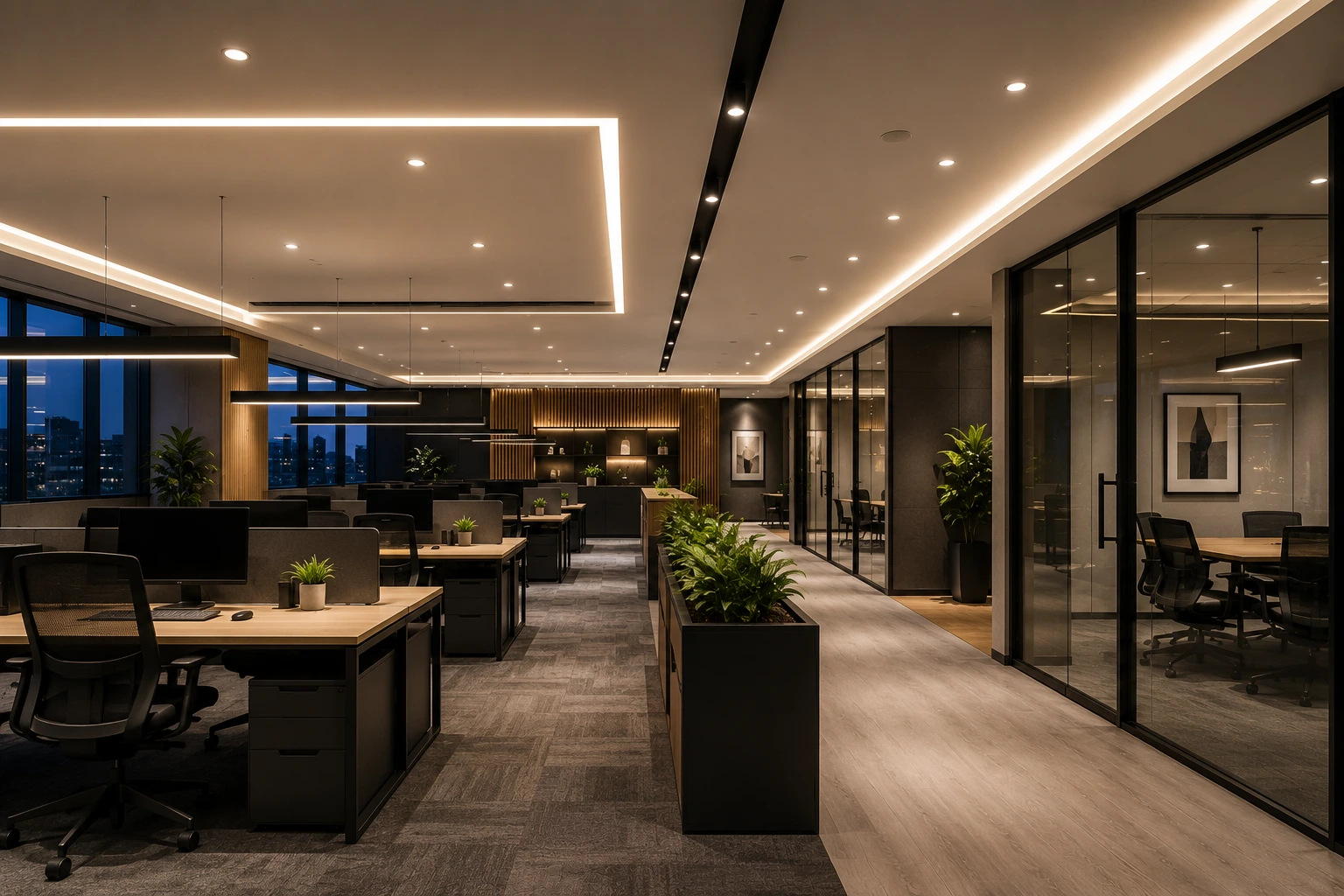
3. Office Lighting
Modern offices require lighting that supports both functionality and the overall atmosphere of the workplace.
Good office lighting should provide adequate visibility while avoiding unnecessary glare and harsh lighting.
Lighting can also be used to define different areas within an office, including:
- Workstations
- Meeting rooms
- Reception areas
- Corridors
- Breakout spaces
- Feature areas
A combination of functional and decorative lighting can create a more balanced office environment.
4. Restaurant & Café Lighting
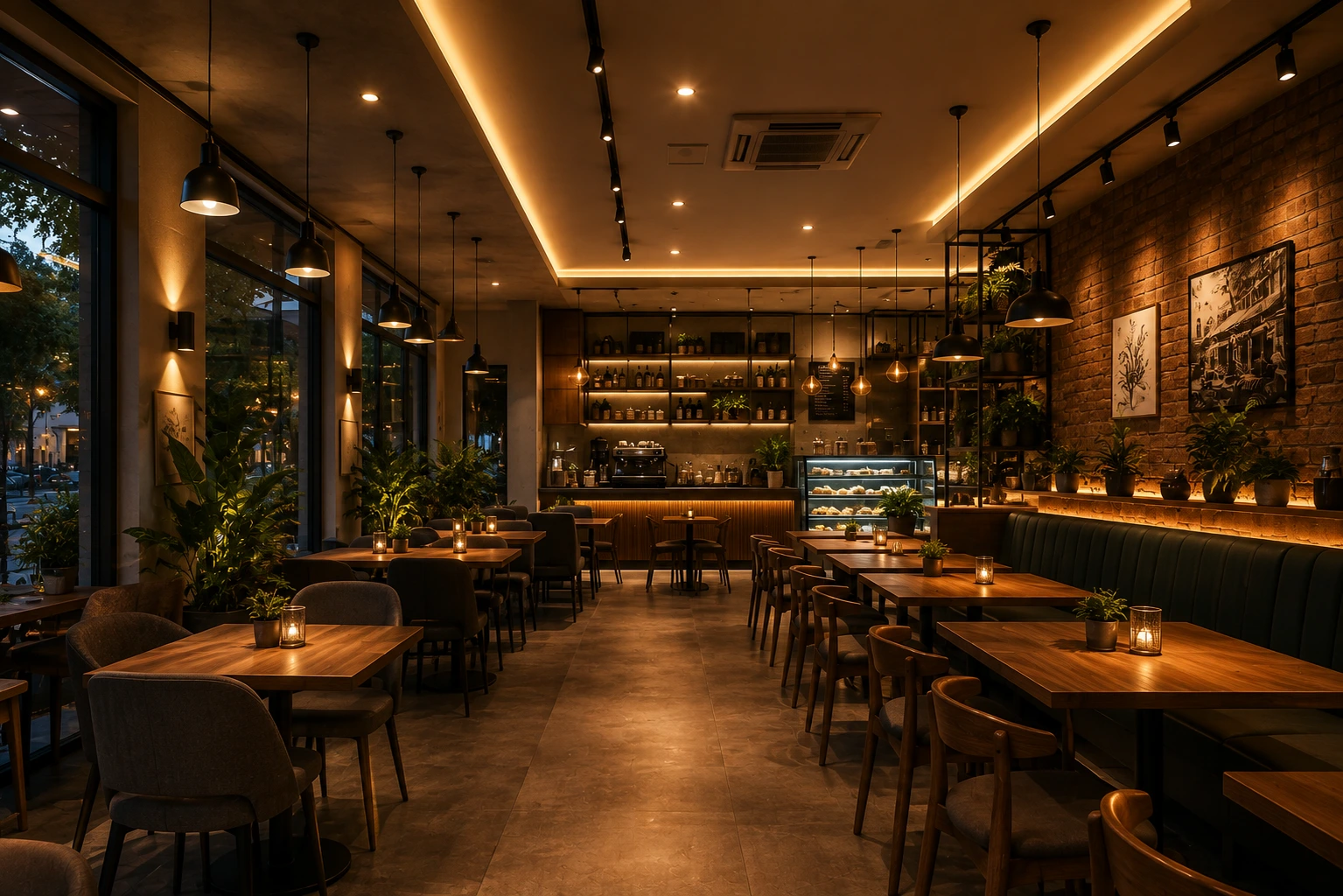
Lighting contributes significantly to the atmosphere of restaurants and cafés.
A bright, clean lighting approach may work well for a casual daytime café, while a restaurant may benefit from warmer and more atmospheric lighting.
Lighting can be used to highlight:
- Dining areas
- Tables
- Bar counters
- Feature walls
- Artwork
- Architectural elements
- Signage
The objective is to create an environment that complements the brand and dining experience.
5. Hotel & Hospitality Lighting
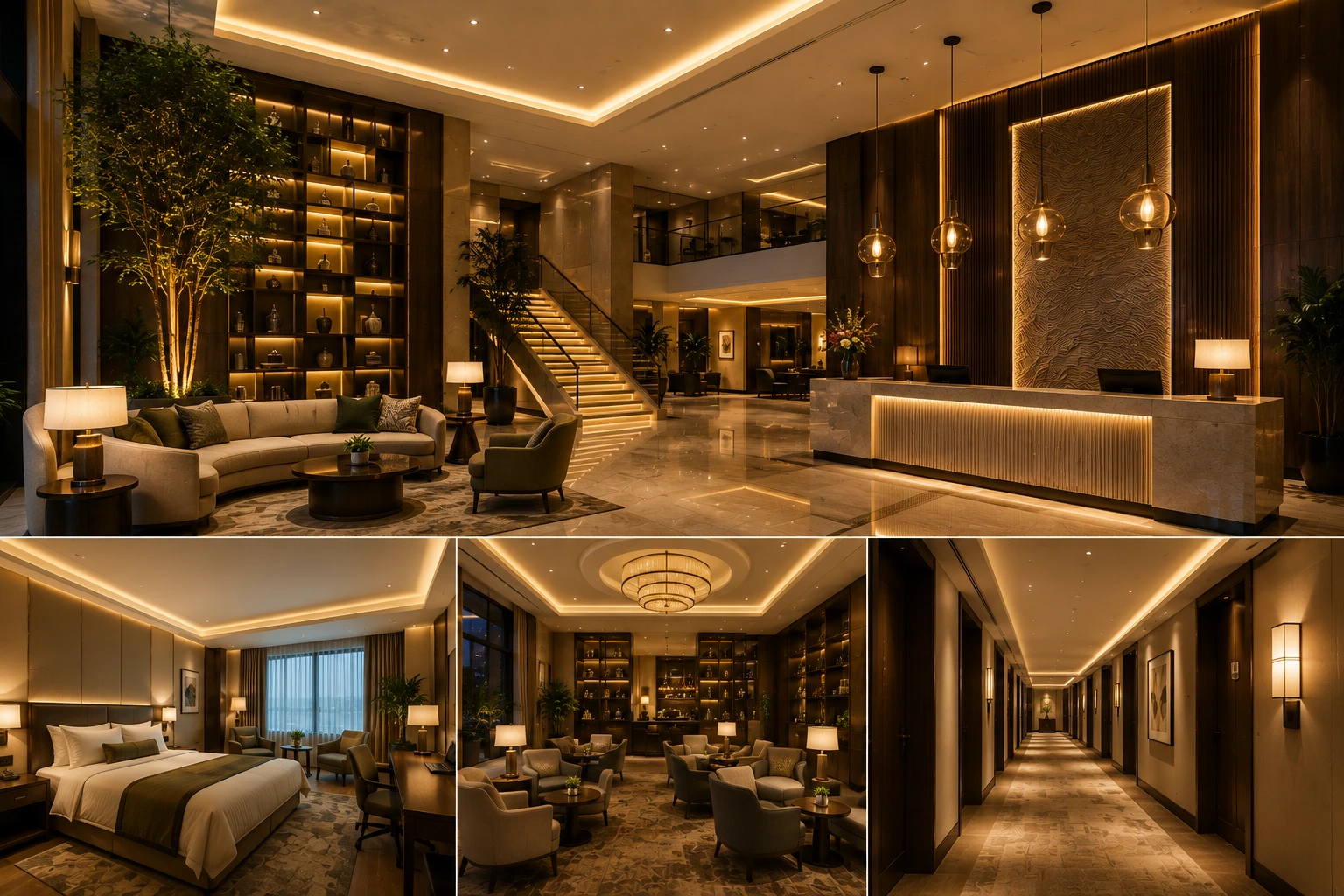
Hotels and hospitality spaces often use multiple lighting layers to create a welcoming and premium environment.
Lighting can be incorporated into:
- Building façades
- Entrances
- Lobbies
- Corridors
- Restaurants
- Feature areas
- Outdoor spaces
A consistent lighting approach can help connect different areas of a property while reinforcing its overall design.
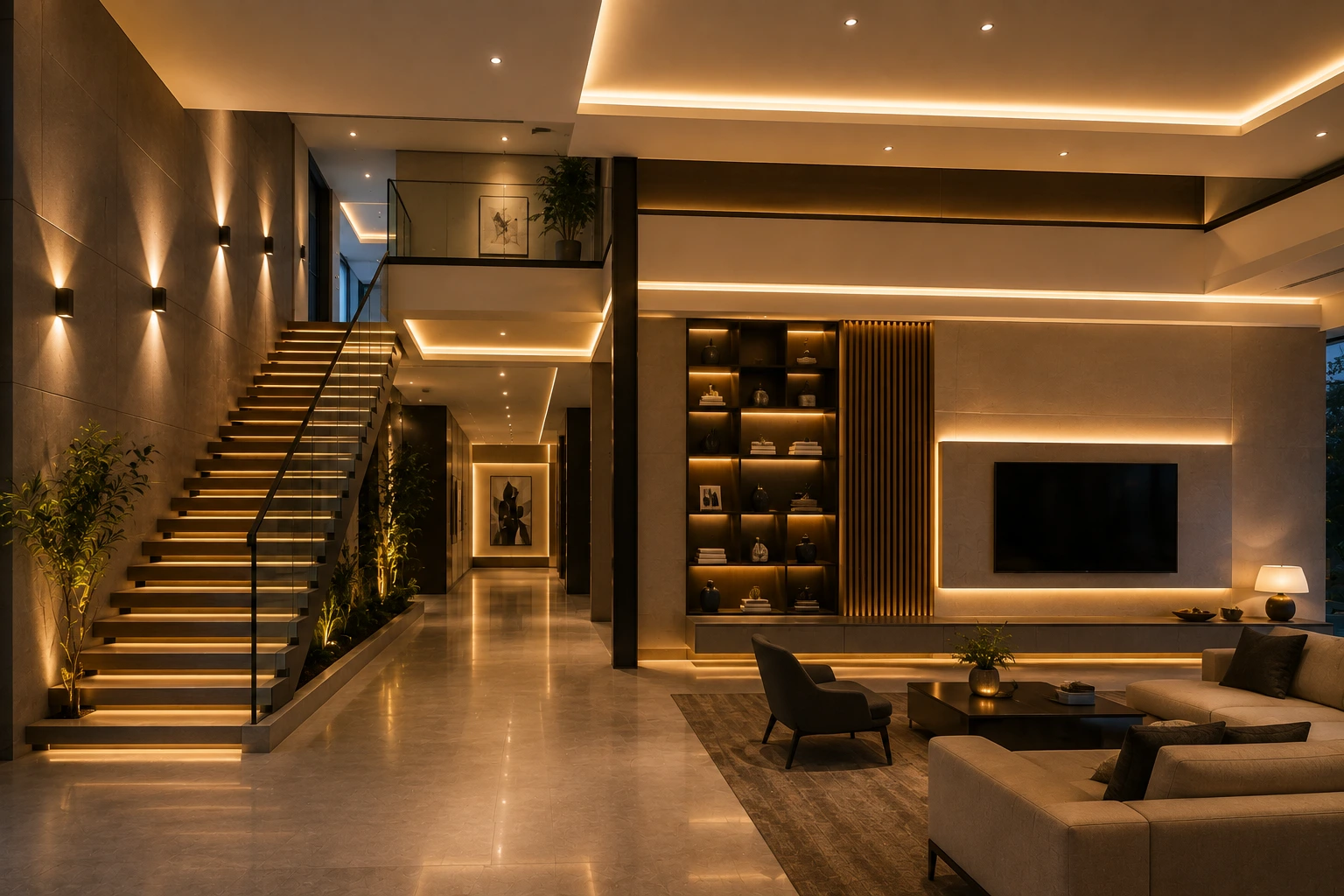
6. Interior Architectural Lighting
Architectural lighting isn't limited to building exteriors.
Inside a commercial space, lighting can be integrated into ceilings, walls, niches, display areas and architectural features.
For example, lighting can be used to highlight:
- Textured walls
- Ceilings
- Staircases
- Columns
- Artwork
- Brand displays
- Reception areas
This allows lighting to become part of the interior architecture.