How to Choose the Right Signage for Your Business
How to Choose the Right Signage for Your Business
Your signage is one of the first things potential customers notice when they see your business.
A well-designed sign can help people identify your business, communicate your brand and make your storefront easier to notice. On the other hand, signage that is difficult to read, poorly lit or inconsistent with your branding can reduce the overall impact of your storefront.
With so many options available from ACP and acrylic signage to LED, channel letters, stainless-steel lettering and illuminated signs choosing the right solution can feel overwhelming.
This guide explains the key factors to consider before selecting signage for your business.
1. Start With Your Business Type
The right signage depends heavily on the type of business you operate.
A jewellery store may require a premium and sophisticated look, while a café might benefit from more creative and visually engaging signage.
For example:
| Business | Possible Signage Options |
|---|---|
| Retail Store | 3D letters, ACP, LED signage |
| Restaurant | Channel letters, LED, neon |
| Café | Acrylic, neon, illuminated signage |
| Salon | Backlit letters, acrylic |
| Jewellery Store | Stainless steel, premium acrylic, backlit letters |
| Clinic | Acrylic, clean illuminated signage |
| Office | ACP, metal lettering, 3D letters |
| Showroom | Channel letters, LED, premium lettering |
Your signage should reflect the personality and positioning of your brand.
2. Consider Where the Sign Will Be Installed
Location plays an important role in choosing signage.
Outdoor signage needs to withstand environmental exposure while remaining visible from a distance.
Indoor signage may focus more on aesthetics, wayfinding and brand presentation.
Consider:
- Is the sign indoors or outdoors?
- How far away will customers view it?
- Is the location busy?
- Is the sign visible from the road?
- Are there nearby buildings blocking visibility?
- Will it need to be visible at night?
These factors can influence the size, material, lighting and design of your signage.
3. Choose the Right Signage Material
Different materials create different visual effects.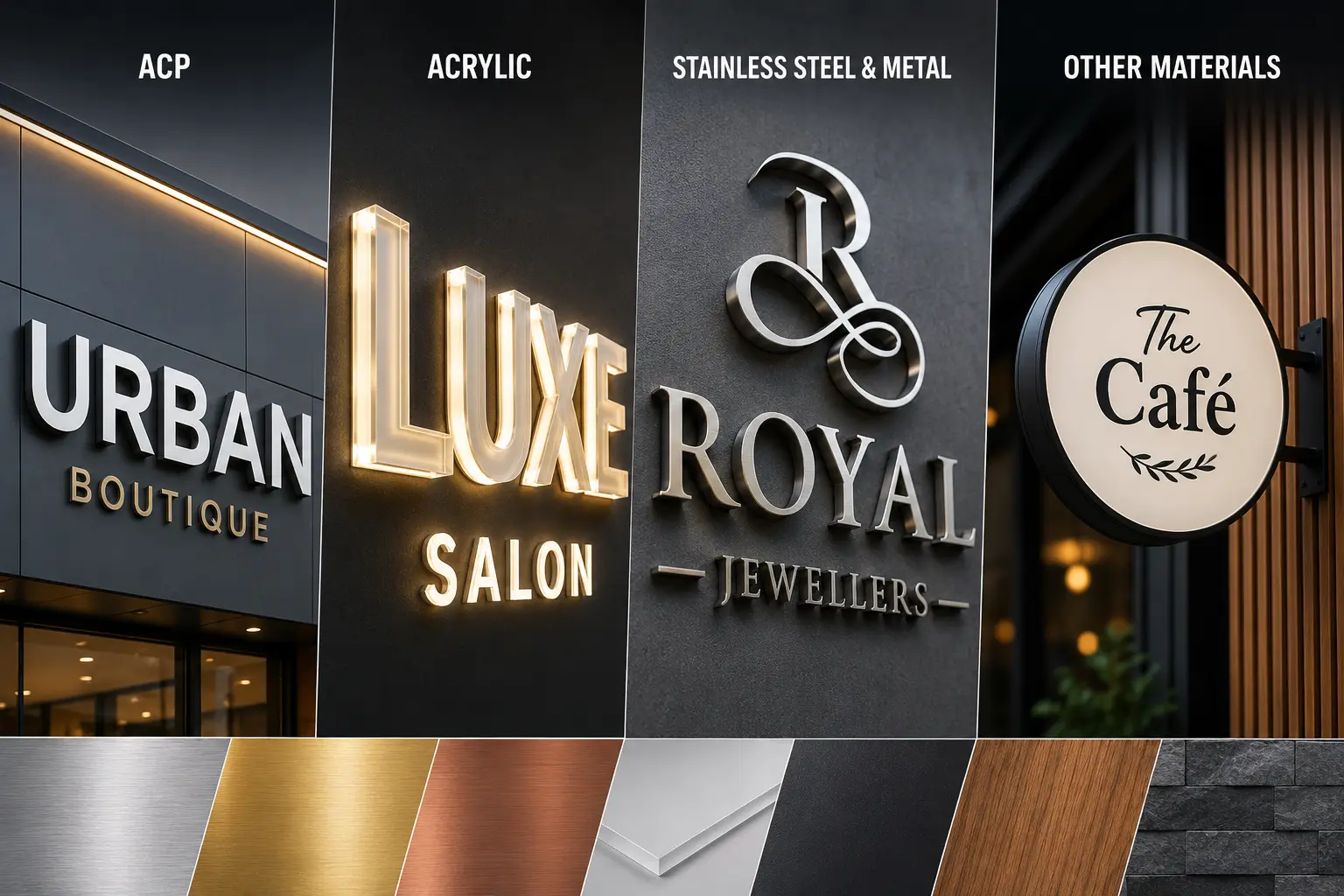
ACP
ACP can provide a clean and modern background for storefront branding and can be combined with raised letters and lighting.
Acrylic
Acrylic is commonly used for 3D letters, logos and premium-looking signage.
Stainless Steel & Metal
Metal and stainless-steel lettering can create a sophisticated and durable appearance.
Other Materials
Depending on the project, signage can incorporate additional materials, finishes and fabrication techniques.
The best material depends on your design, location, desired appearance and budget.
4. Make Your Sign Easy to Read
A beautiful sign isn't effective if people cannot read it.
Your business name should be clearly visible and the typography should work from the distance at which customers will see the sign.
Pay attention to:
Font → Size → Contrast → Spacing → Lighting
Avoid using too many fonts or filling your sign with unnecessary information.
Your primary goal should be simple:
Customers should understand who you are and what you do at a glance.
5. Match Your Signage With Your Brand
Your signage should feel like an extension of your brand identity.
Use your existing:
- Logo
- Brand colours
- Typography
- Design style
- Visual elements
For example, a luxury brand may use metallic finishes and subtle illumination, while a youthful café may use brighter colours and creative LED or neon elements.
Consistency helps create a stronger overall brand presence.
6. Think About Day and Night Appearance
One common mistake is designing signage only for daytime viewing.
If your sign is illuminated, think about how it will look:
During the day:
The materials, colours and letters should remain attractive and readable.At night:
The lighting should provide sufficient visibility while maintaining the intended appearance.
A good signage design works as part of your storefront 24/7, not only during business hours.
7. Decide Whether You Need Illumination
If your business operates after dark or if your storefront needs to remain highly visible in the evening consider illuminated signage.
Common options include:
- Front-lit letters
- Backlit letters
- LED signboards
- Channel letters
- LED neon
- Illuminated logos
Lighting should improve visibility without overpowering the design.
For businesses located on busy roads or commercial areas, properly planned illumination can make a significant difference.
8. Think Beyond Just the Main Signboard
Your main storefront sign is important, but your branding doesn't necessarily stop there.
A complete signage solution may include:
- Main storefront signage
- Logo signage
- Glass graphics
- Directional signage
- Reception signage
- Wayfinding
- Interior branding
- LED lighting
- Promotional signage
Combining these elements can create a more consistent experience for customers.